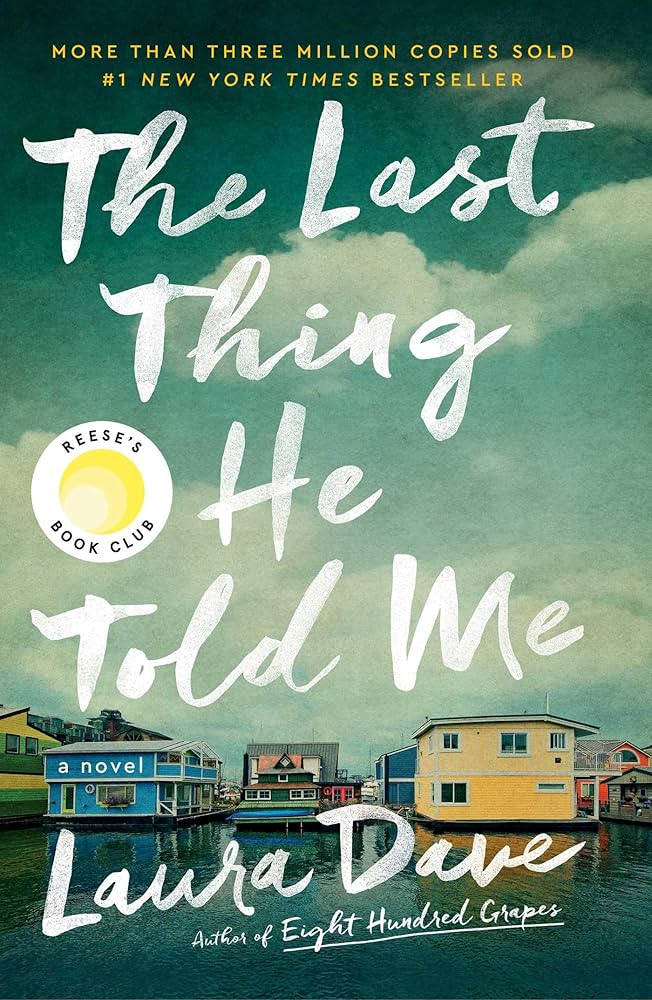
This book pulled me in quietly — not with shock or spectacle, but with the slow unease of realizing that the life you thought you knew can unravel without warning.
At its core, this is a story about absence. About the sudden vacuum left behind when someone disappears and takes their truths with them. What struck me wasn’t the mystery itself, but the emotional disorientation that followed it. The way certainty dissolves. The way trust begins to feel fragile, retroactive — something you replay rather than rely on.
As I read, I kept noticing how often we build our lives on assumed knowing. We believe that proximity equals understanding. That love guarantees transparency. That shared years mean shared truths. This book gently dismantles that illusion, showing how easily someone can be fully present and still unknowable.
What stayed with me most was the complicated relationship at the center of the story — the tentative, resistant, slowly forming bond between two people bound not by choice, but by circumstance. There is something deeply human in the way connection emerges here, not through affection at first, but through shared loss and the necessity of moving forward when standing still isn’t an option.
This wasn’t a book that rushed me. It moved deliberately, allowing space for doubt and grief to coexist with forward motion. The emotional weight never felt manufactured — it felt familiar. Like the quiet reckoning that comes when you realize the story you were living in is no longer intact, and you have to decide whether to rebuild using what remains.
When the book closed, I wasn’t left thinking about twists or revelations. I was thinking about how often we mistake consistency for safety. How rarely we question the narratives we’re comfortable inside of — until something breaks them open.
This book didn’t leave me unsettled so much as reflective. It reminded me that closure doesn’t always arrive with answers, and that sometimes the bravest thing we do is learn how to live alongside the questions.

 When the Book Closes
Leave a comment