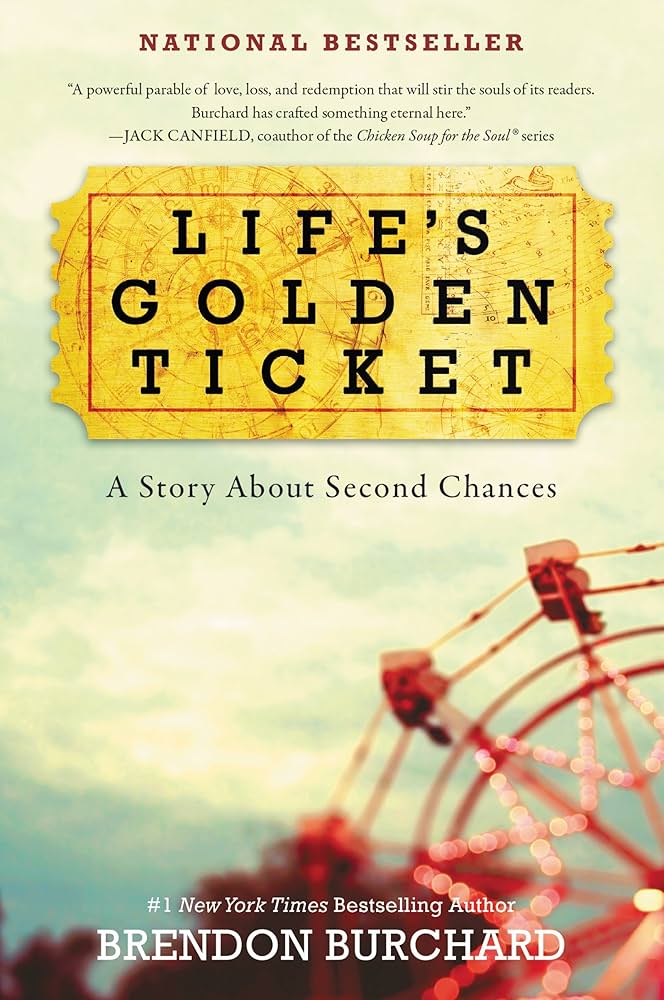
This book had all the bones of something extraordinary — and that’s what made it feel a little disappointing.
The concept itself intrigued me immediately. It felt fresh, untouched by other stories I’ve read, and full of possibility. I was drawn in quickly, and it carried me easily — this was not a difficult book to get through. In fact, I finished it in just a couple of days, which usually signals engagement for me. But when it ended, I realized something important: moving quickly through a book doesn’t always mean it moved me.
There were moments — ideas, scenes, emotional pivots — that seemed poised to be riveting. Moments that could have lingered, deepened, or expanded into something truly affecting. Instead, they passed a little too cleanly. A little too neatly. I found myself wanting the story to sit longer in its own weight, to trust its own potential rather than rushing toward resolution.
And yet, despite that, I don’t think this book is without value.
If you approach Life’s Golden Ticket with an open mind, there is a beautiful message here. One about love — not just romantic love, but the quiet, sustained kind that shows up in how we live our lives. About choosing a path that, when you reach the end, you can look back on and say it mattered. That it was intentional. That it was well spent.
There’s something gentle and hopeful in the way this book invites reflection on what we owe ourselves, and what we owe others — even strangers. It gestures toward the idea that knowing your worth doesn’t absolve you from offering care outward, and that fulfillment isn’t just about claiming what you deserve, but about how thoughtfully you move through the world while doing so.
For me, this was a book that worked best when I treated it less as a fully realized emotional experience and more as a framework — a shell for my own thoughts to inhabit. It asked questions that I had to finish answering. It opened doors that I had to walk through on my own.
In that sense, it was thought-provoking — but not because it did the emotional work for me. Because it gave me space to do that work myself.
And I think that’s the dividing line with a book like this.
If you enjoy stories that guide you firmly, immersing you fully in their emotional depth, this one may feel thin or underdeveloped. But if you’re someone who likes to read reflectively — someone who enjoys expanding on ideas internally, turning them over long after the page is done — there is something here to work with.
When the book closed, I didn’t feel changed. But I did feel invited. Invited to think more carefully about what a meaningful life looks like to me — and how often we pause long enough to ask whether the lives we’re building are ones we’ll eventually be grateful to have lived.
For some readers, that invitation will be enough. For others, it may not land deeply enough to justify the time.
For me, it was somewhere in between.


 When the Book Closes
Leave a reply to Pratiksha Awari Cancel reply